

By Cree M.J.
The Phionic Series
Phionic Intonation and the Phionic Series represent a natural convergence of the golden ratio and the layout of modern 12-tone temperament. They form a chart of Phi-based relationships that can be used as the foundation for a mathematically aligned tonal tuning system, capable of satisfying modern concepts of musical harmony and intervals




A Phi Derivative Poly-scale, Microtonal system of intonation.
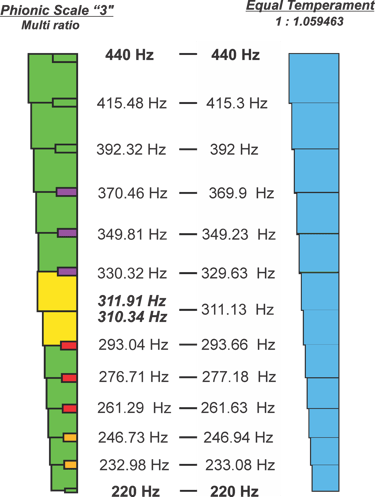
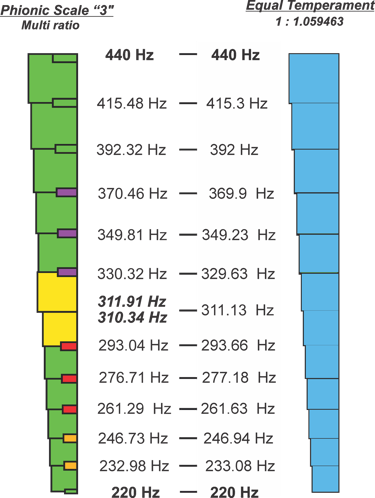
The Phionic scales, when compared to Western 12-tone equal temperament, are extremely similar, as equivalent intervals differ only by a small amount and do not sound harmonically unfamiliar, so current music theory remains applicable with certain additional new factors.
Unlike equal temperament’s uniform ratios, the Phionic scales are composed of two different ratios. One ratio is slightly smaller than equal temperament’s 1:1.059463, at approximately 1:1.0591. The other ratio, which is highlighted, is approximately 1:1.155 and is known as the Bridge Interval.
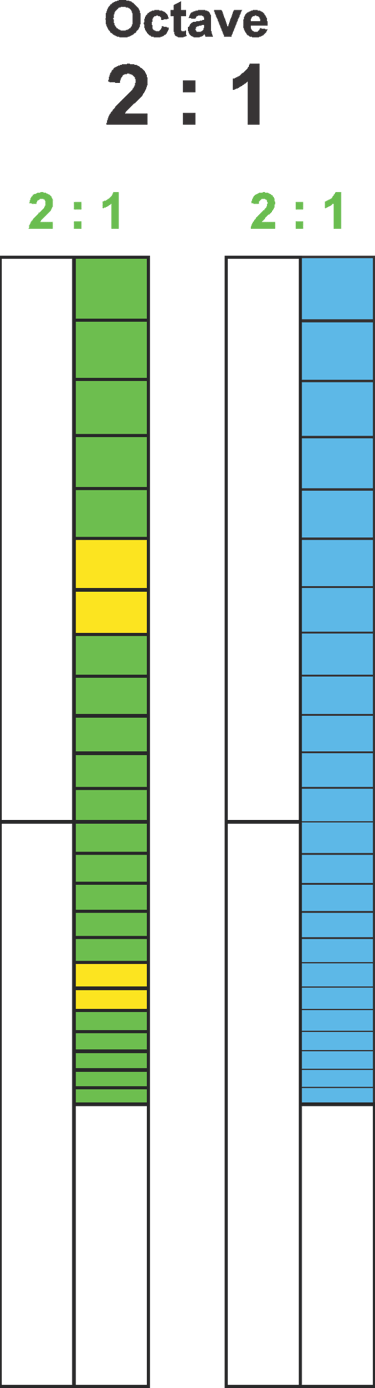
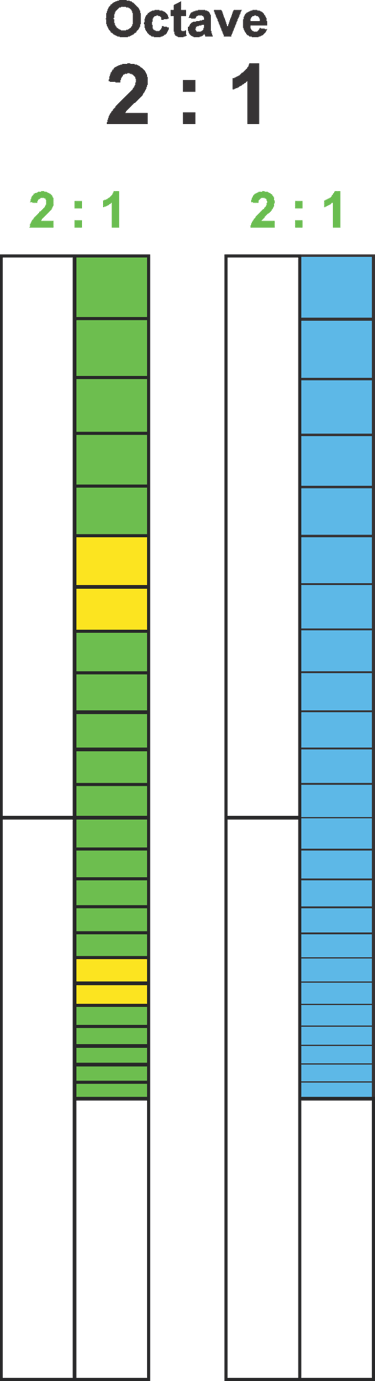
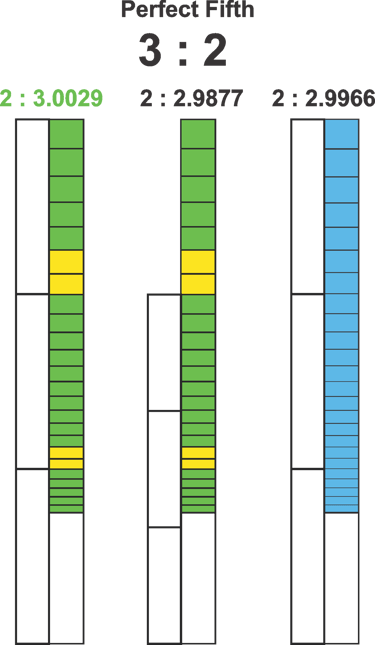
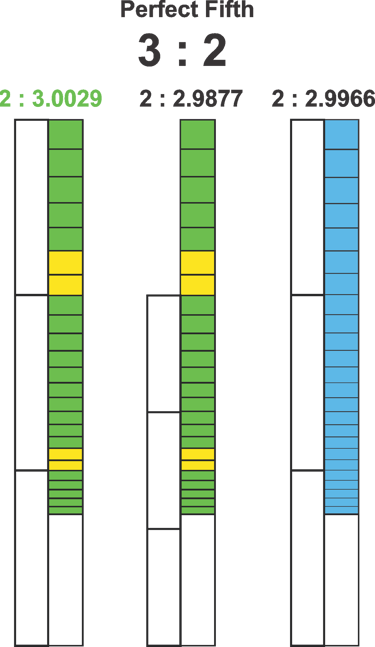
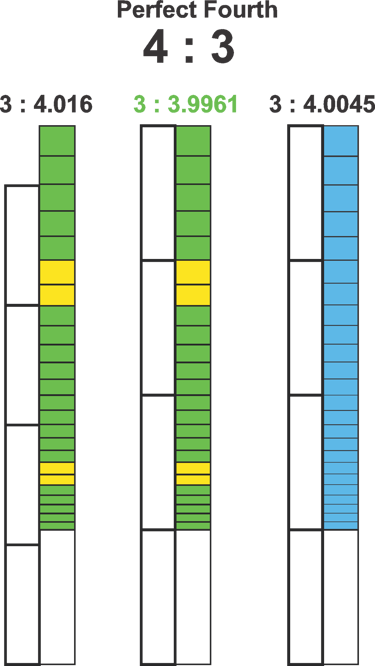
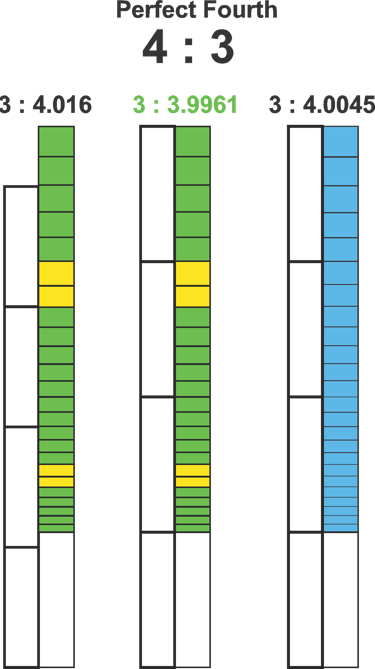

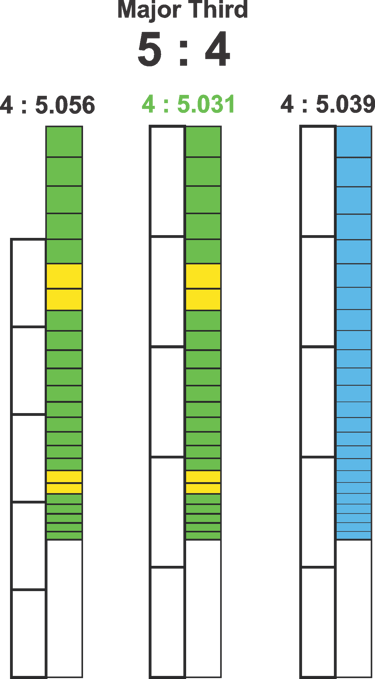
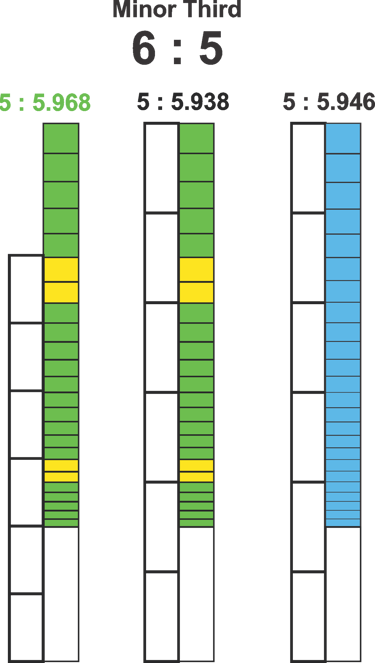
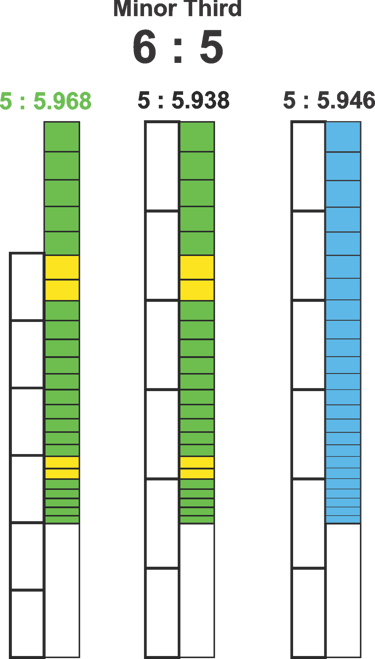
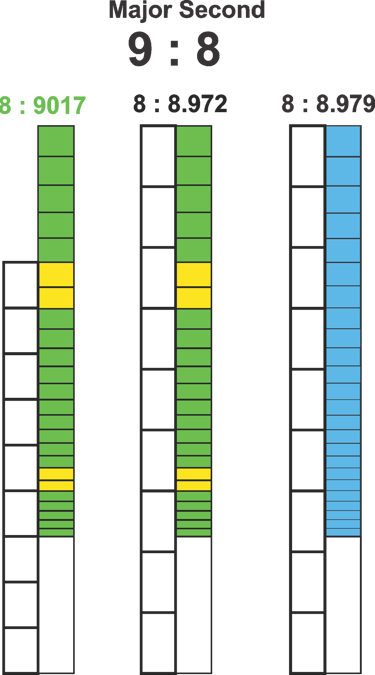
We can interpret the Phionic intervals as having strong musical character, as certain intervals fall slightly more in or out of tune when compared to equal temperament. This can be used creatively. In addition, selecting one of the five different Phionic scales as a base alters the tonal palette of a piece, or can be used to optimize the intervals for a given musical key or set of notes.
The very interesting structure of the Phionic Series is covered on the page titled “Phionic Geometry”, but in simple terms, it consists of cycles of Phi (the Golden Ratio). This structure produces five different scales per “Phi-cycle,” with an infinite series of these cycles extending in both directions. The position of the “Bridge” interval varies between the scales of a single Phi-cycle, and we can observe that within one Phi-cycle, the Bridge makes a full sweep across the octave. Relative to the static ratios of equal temperament, the Phionic ratios appear to undulate like a wave.
How these scales are used is ultimately open to interpretation and imagination. The regions shown in yellow designate potential positions for the Bridge. One may choose a single position to maintain a 12-tone structure, or include all available Bridge positions to create a system of up to 14 notes, allowing for a transient Bridge Interval that can be crossed (or not) depending on musical intent. Multiple scales can also be used simultaneously, though this is a broad topic and is discussed on the next page. Choosing a Bridge position within the proper regions does not affect the surrounding interval values, as it is “baked into” the structure of each given scale.
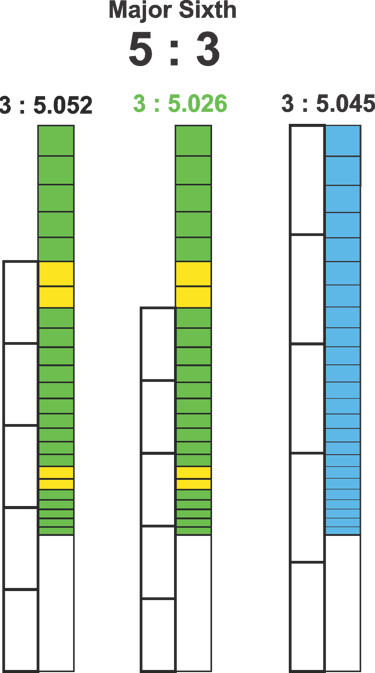
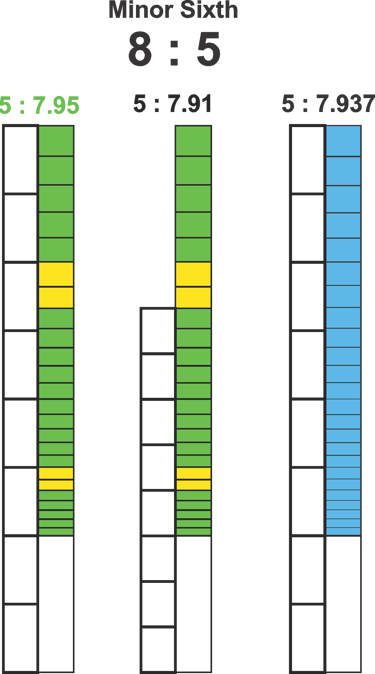
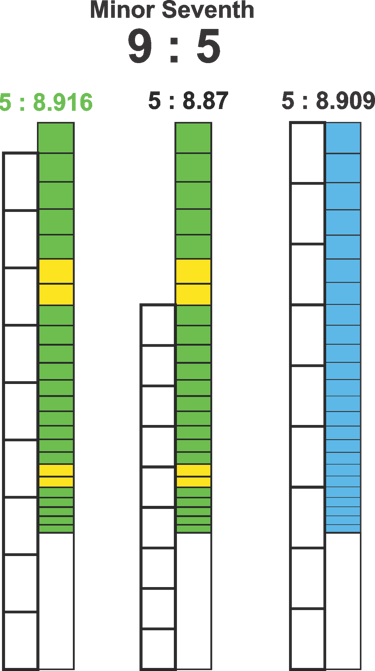
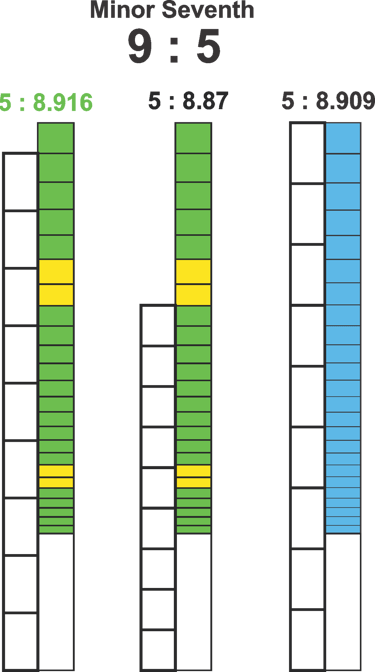
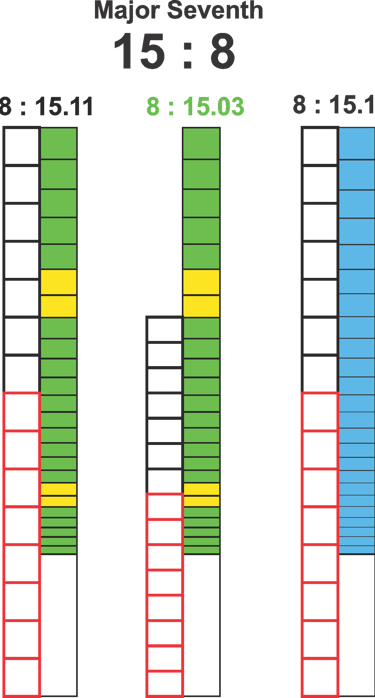
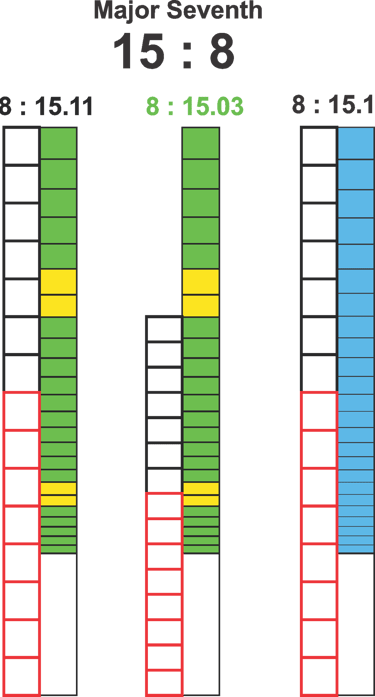
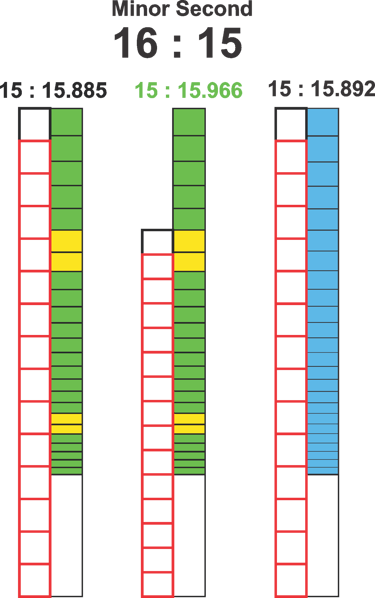
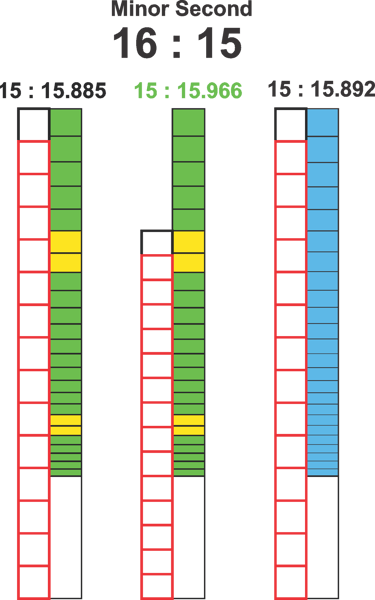
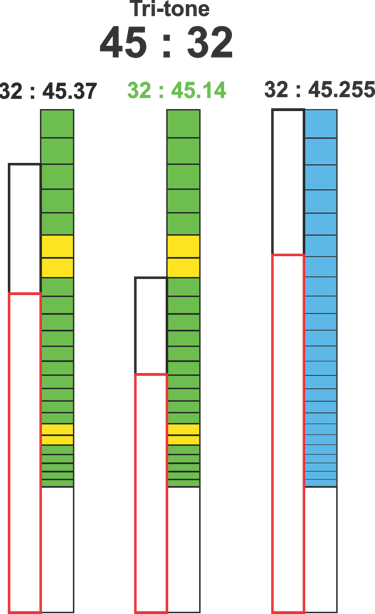
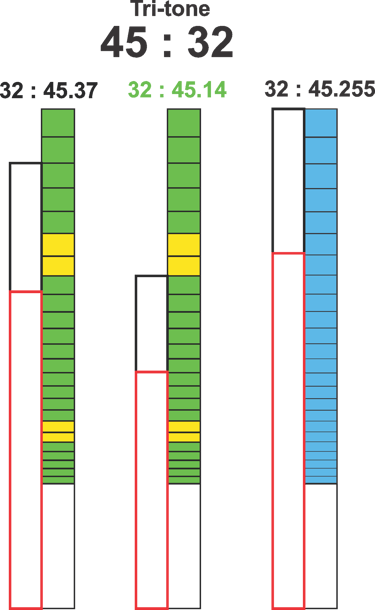
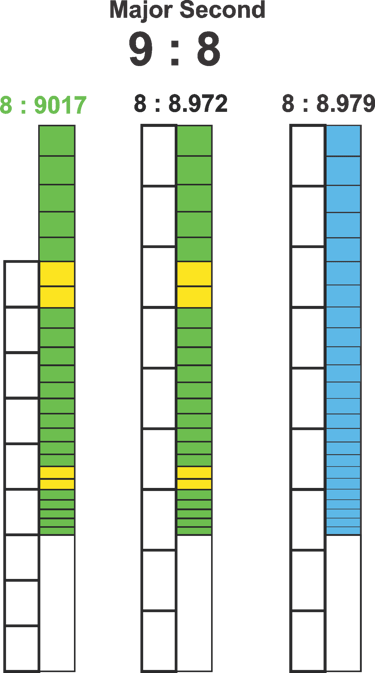
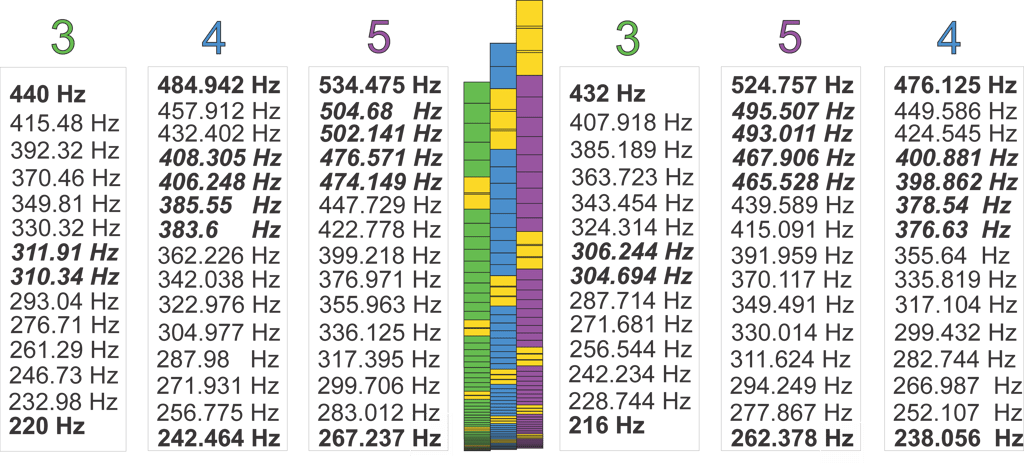
Below is a chart of values that you may use to experiment for yourself with the ratios of the Phionic series (cents coming), the middle scale has been chosen as the balance point from which to base the frequencies.
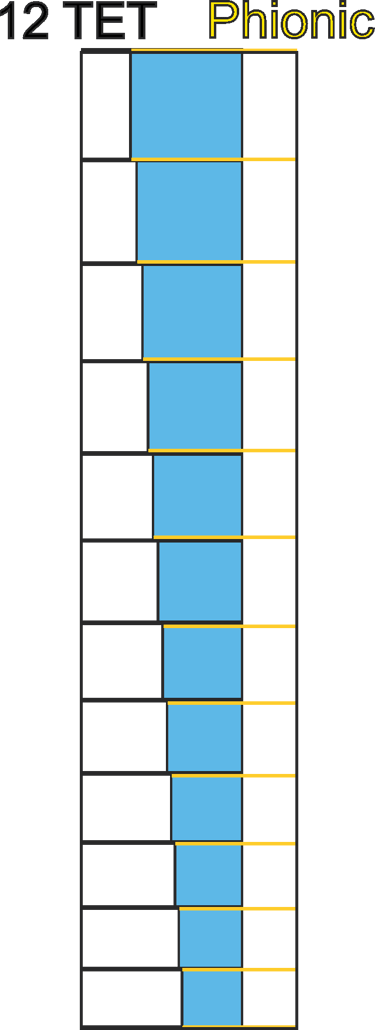
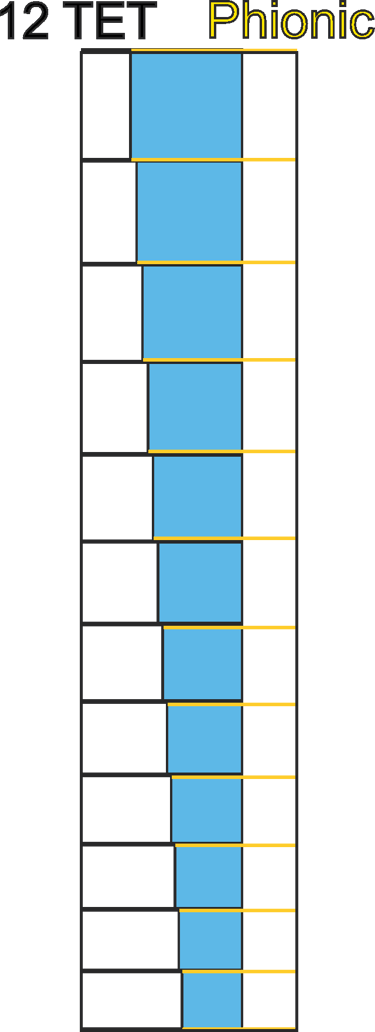
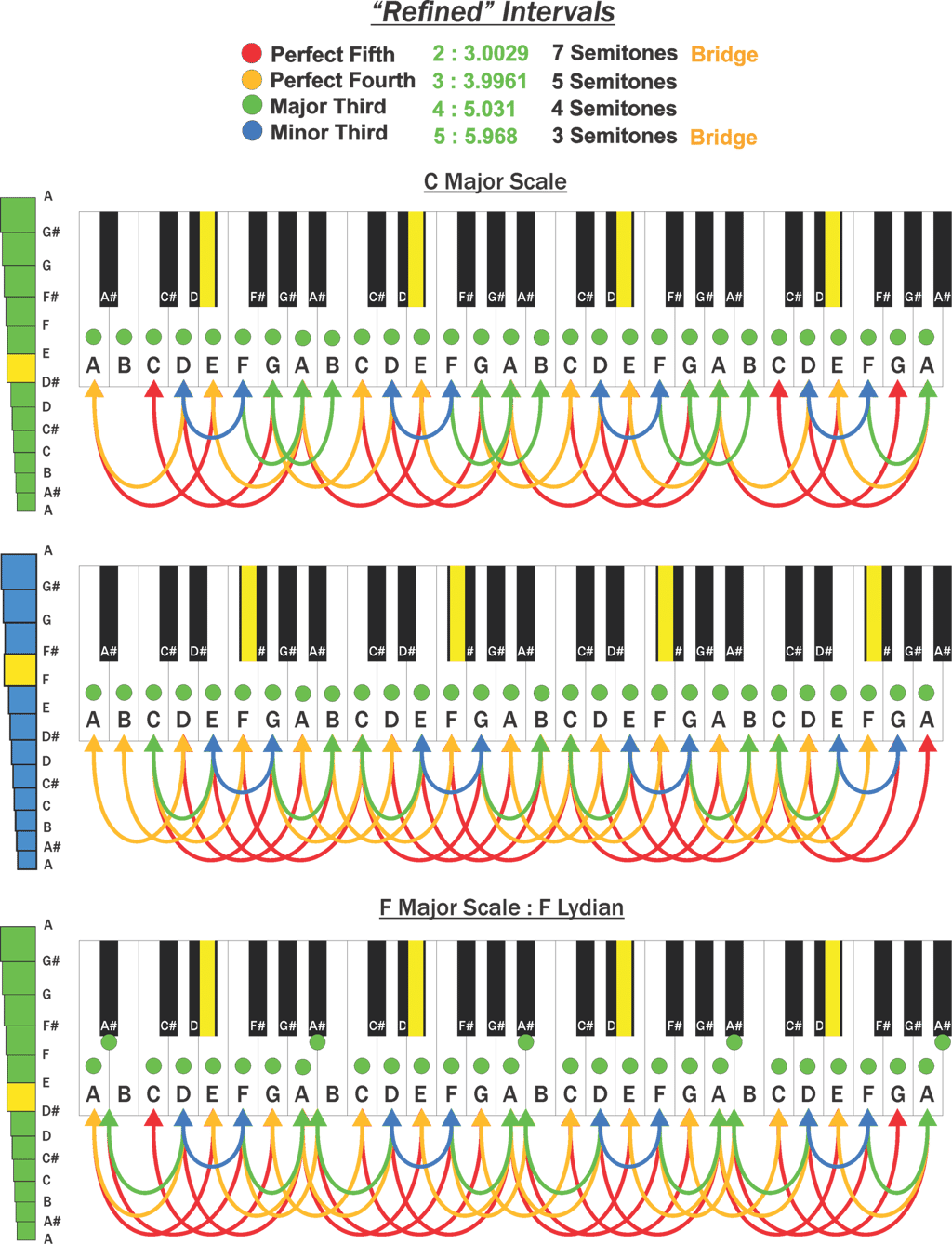
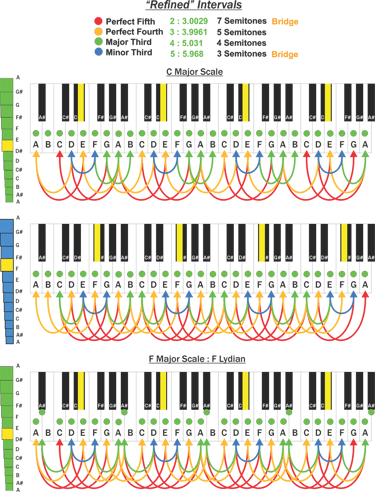
From the diagrams above, we can see how different Bridge positions across the octave in a 12-tone system affect the intervals of different scales. In terms of the number of refined intervals within a C major scale, the Bridge positioned between F and F♯ is more efficient than one placed between D♯ and E. However, placing the same Bridge between D♯ and E produces improved results for an F major scale. For this reason, these refined intervals are best structured around the dominant scale of a song or tuning system.
The overall differences between the ratios of equal temperament and the Phionic Series are relatively small. As a result, the increased wavering between consonance and dissonance is not likely to be immediately obvious. However, by increasing consonance in the key scales, notes, and moments of a composition, it may be possible to achieve greater musical and psychological satisfaction. Since musicians typically use certain scales more frequently than simply all available notes, it makes sense to bias consonance toward those scales in specific musical contexts. This makes sense when we are only using one scale at a time, but the Phionic series is characterised by its polytonal inter-relations and more unique and complex
The Bridge Interval is one of the Phionic scale’s main quirks and charms. It not only connects the underlying geometry of the scale but also serves as a link between the various scales of the Phionic Series.
Because there are two different ratios, there are also two different conditions that determine the exact harmonic ratio of an interval. This depends on whether or not the interval crosses the “Bridge.”
By laying out the various musical intervals and comparing the Phionic Series with equal temperament, we can see that the Phionic Series contains intervals that are, in most standard cases, both slightly more and slightly less consonant.
Mobile users: tap to enlarge.